Part 1
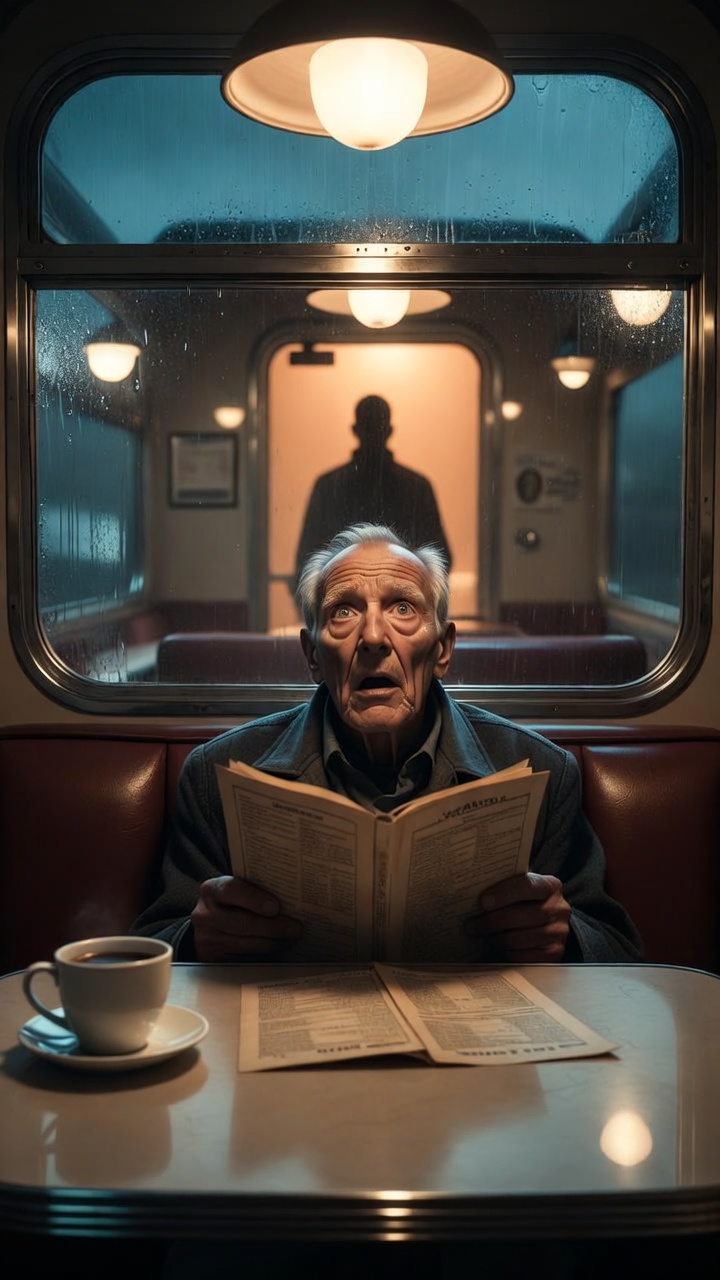
The old man sat in the same diner booth every Friday for 40 years, holding two menus.
One menu was for him.
The other rested across from him.
That was the thing people noticed first.
Not his age.
Not the quiet way he came in.
Not the silence around him.
It was the second menu.
Every Friday, the same scene returned inside that diner. The old man would sit in the same booth, with the same empty space facing him, and he would hold two menus like both of them still mattered.
The place changed around him only in small ways.
The calendar moved.
The years passed.
But his routine stayed.
Friday after Friday.
Year after year.
Forty years is a long time to keep a habit alive.
It is even longer to keep sitting beside something no one else can fully understand.
He never explained it.
He did not have to.
The two menus seemed ordinary at first, the kind any customer might pick up before choosing a meal. But in his hands, they became heavier than paper.
They looked like memory.
They looked like a promise.
They looked like grief that had learned how to behave in public.
The old man never chose another booth. He did not move to a different table or break the pattern after all those years. He returned to the same place, on the same night, as if some part of time had stopped there and only the world outside had kept going.
People in the diner had seen it for years.
They had watched him come in on Fridays.
They had watched him sit down.
They had watched him hold one menu for himself and leave the other across from him.
They had watched the empty seat.
After so long, it almost became part of the diner.
Like the booth.
Like the door.
Like the quiet ache that seemed to arrive whenever he did.
No one knew what this night would become.
No one inside understood that this Friday would not be like all the Fridays before it.
The old man was there again.
The booth had not changed.
The two menus were still in his hands.
The years still seemed to be sitting with him, silent and patient, across that table.
Then the door finally opened.
And in that moment, everything people thought they understood about the old man, the booth, and the two menus began to change.
The old man sat in the same diner booth every Friday for 40 years holding two menus… but when the door finally opened that night, nobody inside was prepared for what happened next 👇❤️
Part 2
The old man sat in the same diner booth every Friday for 40 years holding two menus, and when the door opened that night, the second menu trembled in his hand.
Not much at first.
Just enough for the young waitress to notice.
Walter had been looking toward that door the way he always did, with tired eyes and a soft patience that made people lower their voices around him. The diner was busy, but not loud. Forks touched plates. Coffee poured into white cups. Rain slid down the front window in thin silver lines.
Then the man in the doorway stopped.
He was tall, dressed in a dark coat, with a briefcase in one hand and gray beginning to show at his temples. He looked like someone who had spent years becoming important.
But in that moment, he looked like a boy.
His face changed completely.
The waitress saw his lips part.
The briefcase slipped lower in his hand.
“Coach?” he whispered.
The whole diner seemed to quiet around that single word.
Walter did not stand right away. For a few seconds, he only stared at the man near the door, as if age and memory were fighting over what his eyes could believe.
Then his mouth opened slightly.
His fingers tightened around the menu.
“Daniel?” he asked.
The man covered his mouth with one hand.
He nodded once.
Then again.
“It’s me,” he said, but his voice broke before he could say more.
Walter tried to rise, but his knees were weak. The waitress moved quickly, touching his elbow, but he shook his head gently. He wanted to stand on his own.
Daniel crossed the diner before Walter could take one full step.
He set the briefcase down and wrapped his arms around the old man.
Not politely.
Not carefully.
Like someone holding onto the last living piece of a life he had almost lost.
Walter’s hands lifted slowly and pressed against Daniel’s back.
His chin trembled.
“You came,” Walter whispered.
Daniel closed his eyes.
“I promised.”
For a long moment, neither of them moved.
The young waitress stood beside the booth with the coffee pot still in her hand. She did not pour. She did not speak. Around her, the other customers watched with the quiet respect people show when they realize they are standing near something sacred.
Finally, Walter pulled back and looked at Daniel’s face.
He touched his cheek once, gently, like he was making sure the years had not taken the boy away completely.
“Look at you,” Walter said.
Daniel gave a small, painful laugh.
“I know. I got old.”
Walter smiled through wet eyes.
“No,” he said. “You made it.”
That was when Daniel broke.
He lowered his head.
The tears came fast now, not loud, but helpless. He wiped at them with the back of his hand, embarrassed, though no one in that diner looked away with judgment.
Walter pointed to the empty seat.
“Sit down,” he said softly. “Your place has been waiting.”
Daniel looked at the booth.
At the second menu.
At the cup turned upside down beside the napkin holder.
His face folded with something deeper than sadness.
“Every Friday?” he asked.
Walter lowered himself back into the booth.
“Every Friday.”
Daniel sat across from him slowly, as if the seat itself carried forty years of weight. Walter slid the second menu forward.
It was old at the edges.
The plastic cover had gone cloudy.
The corner was bent from being held too many times by the same patient hands.
“I told you I’d save you a seat,” Walter said.
Daniel placed his hand flat over the menu and stared down at it.
He remembered.
Not the diner at first.
Not the table.
He remembered the field behind the high school. Mud on his shoes. Bruises he pretended came from football. Hunger he tried to hide. Anger that made him push people away before they could abandon him.
He had been seventeen and tired in a way no child should be tired.
Back then, Walter had been Coach Miller. Strong voice. Worn whistle. Old pickup truck. A man who noticed too much.
He noticed when Daniel skipped lunch.
He noticed when Daniel stayed late because home was not safe.
He noticed when Daniel said he was quitting school and said it like he did not care, though his eyes were full of fear.
Walter had not made a speech that day.
He had simply sat beside him on the empty bleachers and handed him a paper bag with a sandwich inside.
“Eat first,” Walter had said. “Then we’ll talk.”
That was how it began.
With food.
With rides.
With extra practice.
With one adult refusing to believe that a hurting boy was already finished.
Walter helped him fill out college forms. He spoke to teachers. He showed up at court once when Daniel’s father got arrested and no relative came. He bought him a used suit for graduation and pretended it had been donated, because he knew Daniel’s pride was fragile.
And on the last day of school, Daniel had stood outside this very diner, holding his diploma in both hands.
He had looked at Walter and said, “One day, when I make something of myself, I’ll come back and buy you dinner.”
Walter had laughed then.
“I’ll hold you to that.”
Daniel had meant it.
But life had carried him far away.
College. Work. More work. New cities. Long years of trying to outrun where he came from. He sent one letter after graduation, then another after his first job, and then shame began to grow in the spaces between them.
The longer he waited, the harder it became to return.
“I thought you would be angry,” Daniel said, his voice low.
Walter looked at him across the table.
“For what?”
“For taking so long.”
Walter was quiet.
Then he reached for the upside-down cup and turned it over.
The waitress understood. She stepped forward and filled it with coffee.
Steam rose between them.
For the first time in forty years, the second cup did not sit empty.
Walter watched the coffee settle.
“I wasn’t angry,” he said. “I was hoping.”
Daniel pressed his fingers to his eyes.
“I don’t deserve that.”
“Maybe not,” Walter said gently. “But boys who grow up scared often spend their lives thinking love has to be earned back. It doesn’t.”
Daniel looked down.
Those words reached a place in him that money, success, and clean suits had never touched.
The waitress set down two plates without asking. The usual for Walter. The same for Daniel. Meatloaf, mashed potatoes, green beans, and two slices of pie waiting at the counter.
Daniel gave a shaky smile.
“You still order this?”
Walter shrugged.
“Didn’t want you to miss anything.”
A soft laugh moved through the diner, tender and careful.
Daniel opened his briefcase then. His hands were unsteady as he pulled out an envelope.
Walter glanced at it.
“What’s that?”
Daniel pushed it across the table.
“Something I should have brought a long time ago.”
Walter did not open it at first.
He only looked at Daniel.
“Dinner is enough.”
Daniel shook his head.
“No, Coach. It isn’t.”
Inside the envelope were documents for a scholarship fund in Walter’s name. Daniel had started it for students from broken homes, students who needed food, rides, fees, shoes, and someone who would not give up on them when they tried to disappear.
Walter read the first page slowly.
His lips trembled.
“You did this?”
“Because you did it first,” Daniel said.
Walter’s eyes filled again.
He tried to speak, but the words would not come.
Daniel reached across the table and covered the old man’s hand with his own.
“You saved one kid,” he said. “Now your name is going to help save more.”
The diner was silent.
Even the rain against the window seemed softer.
Walter looked around the room, then back at the man across from him. He saw the boy with the torn backpack. He saw the player who wanted to quit. He saw the child who had once believed he was too damaged to become anything good.
And now that boy had come back.
Not empty-handed.
Not forgotten.
He had come back carrying proof that kindness can keep breathing long after the person who gave it thinks no one remembers.
Dinner grew cold for a while because neither man cared about eating. They talked instead. About old games. About teachers who had passed away. About the night Walter drove Daniel to a college interview in a snowstorm because the bus had stopped running.
Daniel remembered every detail.
Walter remembered the boy’s face when he got accepted.
Near closing time, Daniel took the check before Walter could reach for it.
Walter frowned softly.
“I can pay for my own meal.”
Daniel smiled through tears.
“Not tonight.”
Then he added, almost in a whisper, “I came back to buy you dinner.”
Walter went still.
The promise had survived after all.
Forty years had passed over it.
Life had buried it under work, distance, shame, and silence.
But it had not died.
When they finally stood to leave, Daniel helped Walter with his coat. The old man let him. At the door, Walter looked back at the booth near the window.
The two menus were still there.
But the seat was no longer empty in the same way.
The next Friday, Walter came again.
This time, Daniel came with him.
And every Friday after that, when he was in town, he sat across from the man who had once saved his life with sandwiches, rides, patience, and belief.
People still looked at the booth.
But now they understood.
Sometimes a small mercy is not small at all.